Star Wars: Galactic Racer's multiplayer 'tour' mode is a chaotic arcade racer spliced with a MOBA, and that somehow works brilliantly
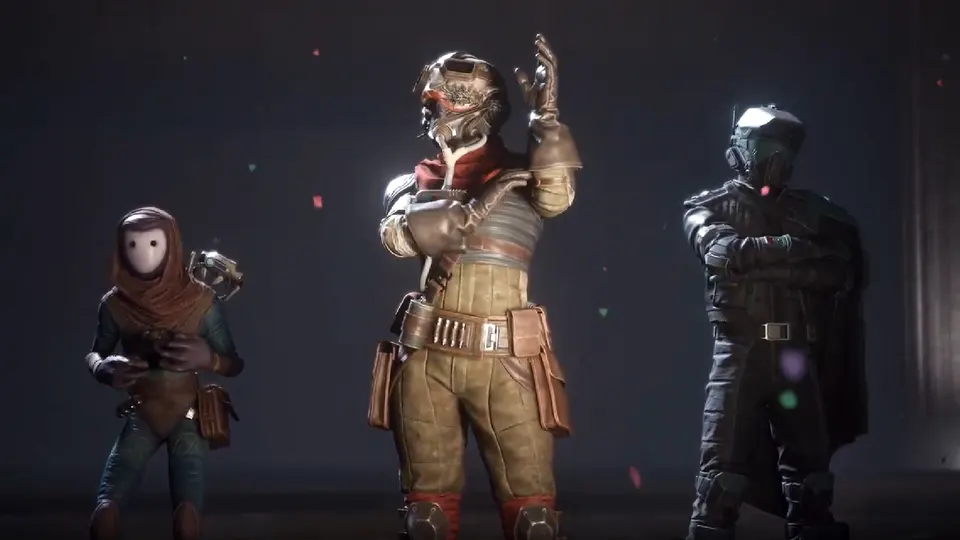
I had the pleasure of playing Star Wars: Galactic Racer recently—it's an upcoming racing game by Fuse Games, a studio filled with Burnout alumni, and while I was intrigued by the roguelike elements of its singleplayer campaign, the real standout to me is its online multiplayer, which is doing something that I would otherwise call ill-advised: Making it a MOBA. Sort of.
When I say the mode's been spliced with a MOBA, I mean that a ton of elements—buildcrafting, match-specific progression, and personal player economy (the more credits you get, the faster you'll scale over the competition)—are similar. It's a little like Overwatch's Stadium mode, which used a lot of familiar MOBA itemisation without the inclusion of lanes or towers.
Now, to be clear, there will be online modes without any of these elements—but given it was the mode Fuse had me playing, the "tour" mode was clearly the one Fuse Games is the most eager to show off. And I can see why, it's genuinely unique.
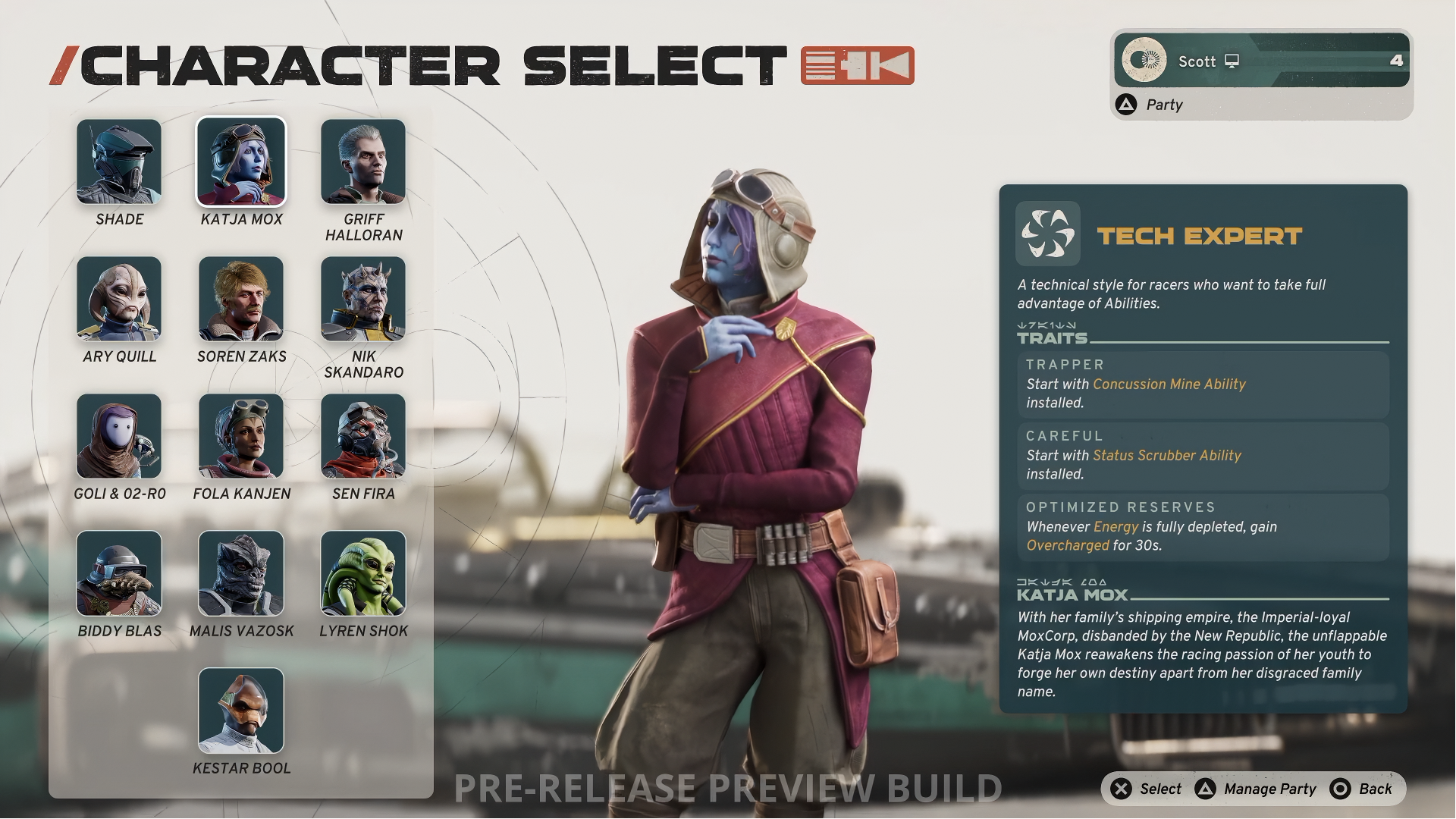
Here's how it works: 12 players (or eight, if you're doing podracing) fight across six planets. The comparisons start in the character select screen—the racers. These are starting kits that have different loadouts. For instance, characters with a Survivor loadout start with a shield, a bonus to their speed that gets lost the first time you crash in a race, and a boost whenever that shield breaks.
But it filters into the actual round-by-round structure, too. After the end of each race in the tour, players get to upgrade their ride's base stats, as well as choose from a selection of parts—borrowed from the roguelike nature of the singleplayer campaign—that can let them cobble together a build throughout a race.
For instance, I had a decent amount of luck speccing into a ramjet (a long-lasting boost that makes your ride hard to control) build with abilities that synergised with each other. In one race, I had one ability where my ramjet's cooldown was significantly reduced, and another where my non-ramjet boost was instantly refilled whenever I spent it, allowing me to bounce back and forth.
You can also snag abilities, like the aforementioned shield, on this screen. These really vary, from torpedoes to flamethrowers—as well as parts that give you elemental resistances, which might factor in based on the planets you'll be visiting during the tour—more on those, later.
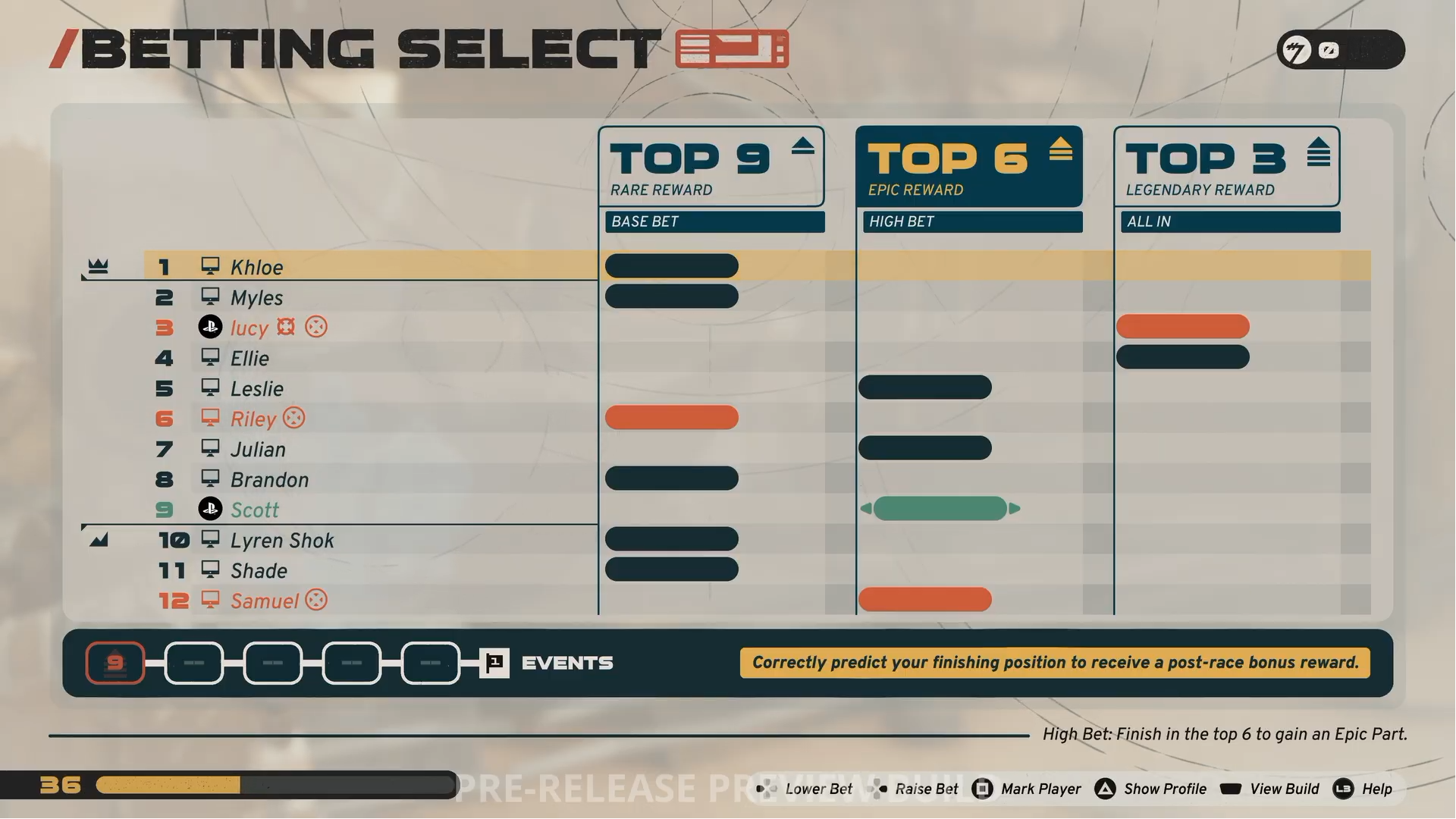
To buy any of these, though, you need credits, which can be earned from one of two ways. Just placing in a race gets you a payout, but you can also snag them by betting on yourself—calling whether you'll place within one of three brackets. In a 12-person race, these are top nine, top six, and top three.
But there are also bounties present in the pod racing version of tours, which give you bonuses for playing in certain ways. For instance, in one round, I went heavy on abilities that could give me eliminations—and snagged an appropriate bounty to match.
This is all part of creative director Kieran Crimmins' vision of a game that balances both player agency and depth. He tells me: "Player agency [means] every choice that you make, whether it be the vehicle that you pick, the upgrade that you pick, the permanent bump to your stats, the parts that you pick, the character that you pick in multiplayer, or the play style that you pick—all those things have to make an actual difference to whether you can win or lose.
"That's what creates that agency to feel like, if you make a mistake, it's your fault, and the game isn't doing something to sabotage you. But also, it lets you strategize and be competitive in a kind of a way that you wouldn't necessarily have been able to do in other racing games out there."
In terms of systems depth, he notes that "the game needs to be easy to pick up so that you can play and enjoy yourself straight away. But then all those systems have to have a physical depth, a mechanical depth." And given the absolute feast of modifiers and parts on display, I think there'll be plenty of opportunity for mastery.
It lets you strategize and be competitive in a kind of a way that you wouldn't necessarily have been able to do in other racing games out there."
Kieran Crimmins, creative director
Though none of that's mandatory if you'd like to hop in and play, says Lucasfilm Games executive producer Craig Derrick: "I think some people want to come in and just play with their friends," he says. "It's inherent in the DNA of the game, and so I think that's just as important as just being able to have a fun experience against one another and see who comes out the winner."
The result is, to be clear, incredibly chaotic, but it's a heck of a lot of fun. The only real complaint, other than getting absolutely trashed, were the environmental factors—certain races had, for instance, acid pits which would ruin your day if you even squeaked a pixel of your ride into them.
In another planet, a building cold status effect could be shucked off by dipping through a narrow heat vent. Which often led to pod racer pile-ups—hilarious, but not exactly great-feeling if you want to win.
Which, as someone who was spending an embarrassing amount of time at the back (skill issue, I know) felt a little at-odds with the design at play. The destructive, fast-paced, arcade racer feeling often bumped its head against the other elements that were urging me to be competitive.
The game's also missing a catch-up mechanic and, again, I only know this because I was getting my butt handed to me. However, in a racer where you can get instagibbed without warning, some way to nudge back into the runnings would be nice—plenty (some would argue most) of my destructions were my fault, but there were a few that I couldn't have reasonably seen coming without eyes in the back of my head.
These are all problems of balance, though, and balance can always be fixed when the full game comes out October 6. The tour mode itself felt slapshot, chaotic, but also deeply engaging—and I'll be thirsty to dig my claws into its systems even more.
2026 games: All the upcoming games
Best PC games: Our all-time favorites
Free PC games: Freebie fest
Best FPS games: Finest gunplay
Best RPGs: Grand adventures
Best co-op games: Better together