Uncharted difficulty was tuned to "slow the player down if they were too good," says Naughty Dog designer: "We can't charge 60 bucks for a 5-hour game"
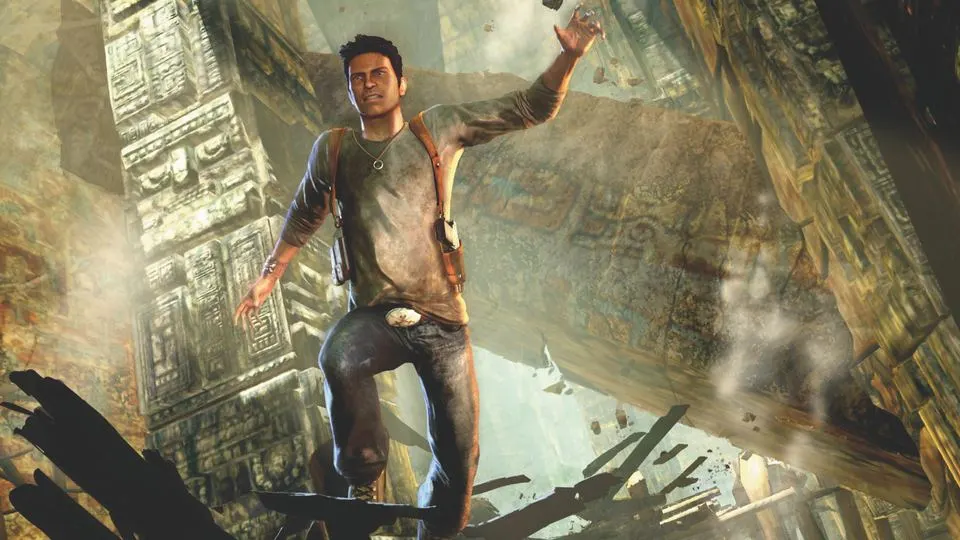
A former Naughty Dog developer says the original game's difficulty was intentionally designed to lengthen the game, amid fears it would otherwise be too short.
Uncharted is a pretty legendary franchise, all things considered; at the very least, it's second only to Naughty Dog's The Last of Us in terms of Sony franchises made from the PS3 onwards. But with how monumental a release Uncharted 2 was and how beloved its two sequels are, it's easy to forget that the original game is kinda… not great. It was ambitious and cinematic for sure, but it's aged much worse than the subsequent entries thanks to its awkward combat. The series uses difficulty scaling akin to games like Resident Evil 4 and God Hand, but the first game wasn't the best implementation, as the difficulty curve jumped between peaceful and punishing at a moment's notice.
Speaking to FRVR, Uncharted and The Last of Us designer Benson Russell recalls, "When we were done, it’s like, this is a five-hour game," adding, "We can’t charge 60 bucks for a five-hour game with no multiplayer! People are going to be pissed off!"
This fear is what led to the implementation of the dynamic difficulty, as Russell explains, "it’s key thing was to slow the player down if they were too good."
Russell reveals "it’s all time based," explaining, "We would do a bunch of focus tests and we would grab the average times per encounter… if you beat a combat encounter faster than the average that we had, we would start cranking the difficulty." He adds that the feature was originally implemented "to find a good balance," but by the end of development "it was more geared toward just slowing you down from rushing through the game."
However, all three games in the original trilogy used this (Russell worked at Naughty Dog until 2015 and doesn't mention if Uncharted 4 used it), the subsequent entries had a pretty good difficulty curve, but this was thanks to a change between games.
"Dynamic difficulty is in all three [games], but in the second and third ones it was tuned to match [you]. It wasn’t tuned to delay the game, or slow you down, it was tuned to match your skill level," Russell explains, which is probably a major reason Uncharted 2 and 3 are both brilliant.