Singing sirens, angry gods and cannibalized crews: Sunless Sea is The Odyssey as an RPG
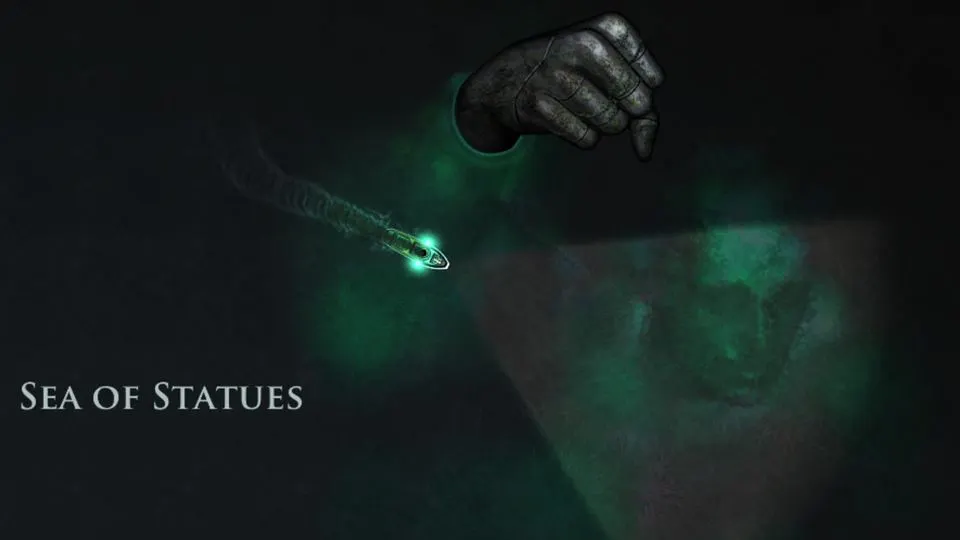
Himesh Patel's Eurylochus asks the ominous question, as he and Odysseus stand on the shores of Troy: "Do we have enough provisions to get home?" It's the quintessential worry that precedes every journey in Sunless Sea, too. As a ship's captain, you wonder: will the supplies we have sustain the crew until next port? And where will that next port be?
In Nolan's take on The Odyssey, Matt Damon's muscle-bound protagonist makes the fateful choice not to follow his warlord, Agamemnon, along an established trade route back to Greece. Instead, he decides to follow a more direct route across alien seas. "A couple of stops on the way home won't kill us," he reasons. They would be famous last words, were they spoken by anyone else on his crew.
But I've made the same decision on many occasions in Sunless Sea. Failbetter's RPG is a roguelike, which means you can lose everything – your belongings, your quests, your history – by setting out in the wrong direction with too few resources. And yet the game teaches you, explicitly, to take risks and venture out into the fog. It's actually your surest means of long-term survival.
Gods willing
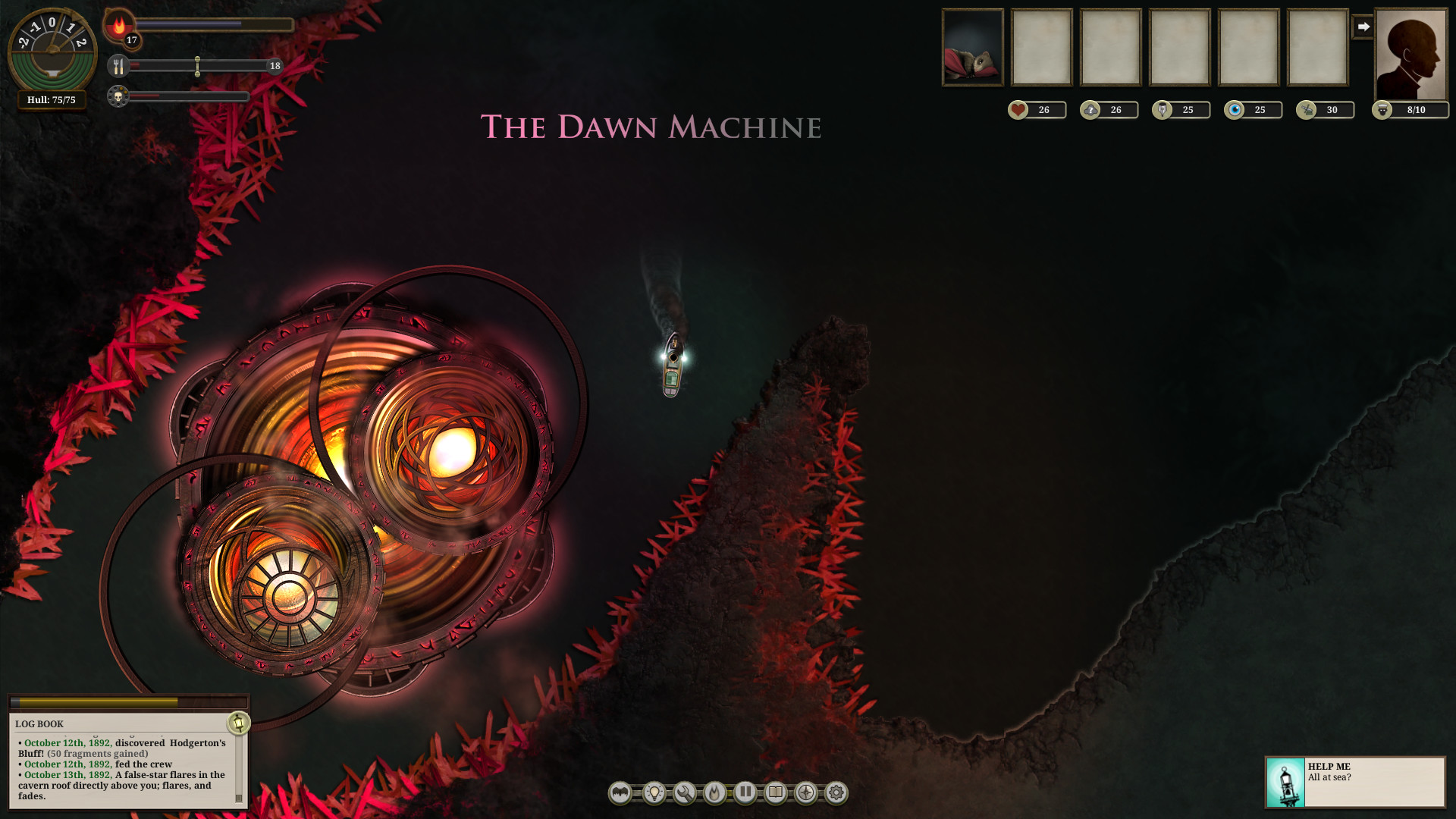
The gains you'll make by ferrying trade goods between familiar settlements are marginal, particularly when captaining a pathetic little put-put with a hold barely big enough to store your own fuel. Those are the kind of runs that end with a pirate blowing a hole in your hull. But adventures? Adventures can make you strong and rich. New sightings of land grant XP to spend on stat buffs, and new lands are stuffed with stories. Stories themselves are Sunless Sea's most reliable currency: port reports you can sell to the Admiralty in Fallen London, and villagers will hand over a crate of coal to hear Tales of Terror. If the 28-century survival of The Odyssey is testament to anything, it's the value of a good story.
Of course, Odysseus' ships aren't fueled by coal, and you'll find games that more closely match the mythical Ancient Greek setting of Homer's epic. There's even one by Ubisoft with 'Odyssey' in the title. Sunless Sea, by contrast, takes place against the backdrop of a quasi-Victorian cave culture, in which Londoners are adjusting to new neighbors with gleaming yellow eyes, tentacled faces, and webbed wings. Its 'zee' isn't even an ocean, technically speaking, but an enormous, brackish pool on which the currents travel in an unnerving spiral. Its zailors navigate by false-stars on the distant cavern roof, which have a habit of rearranging themselves at short notice.
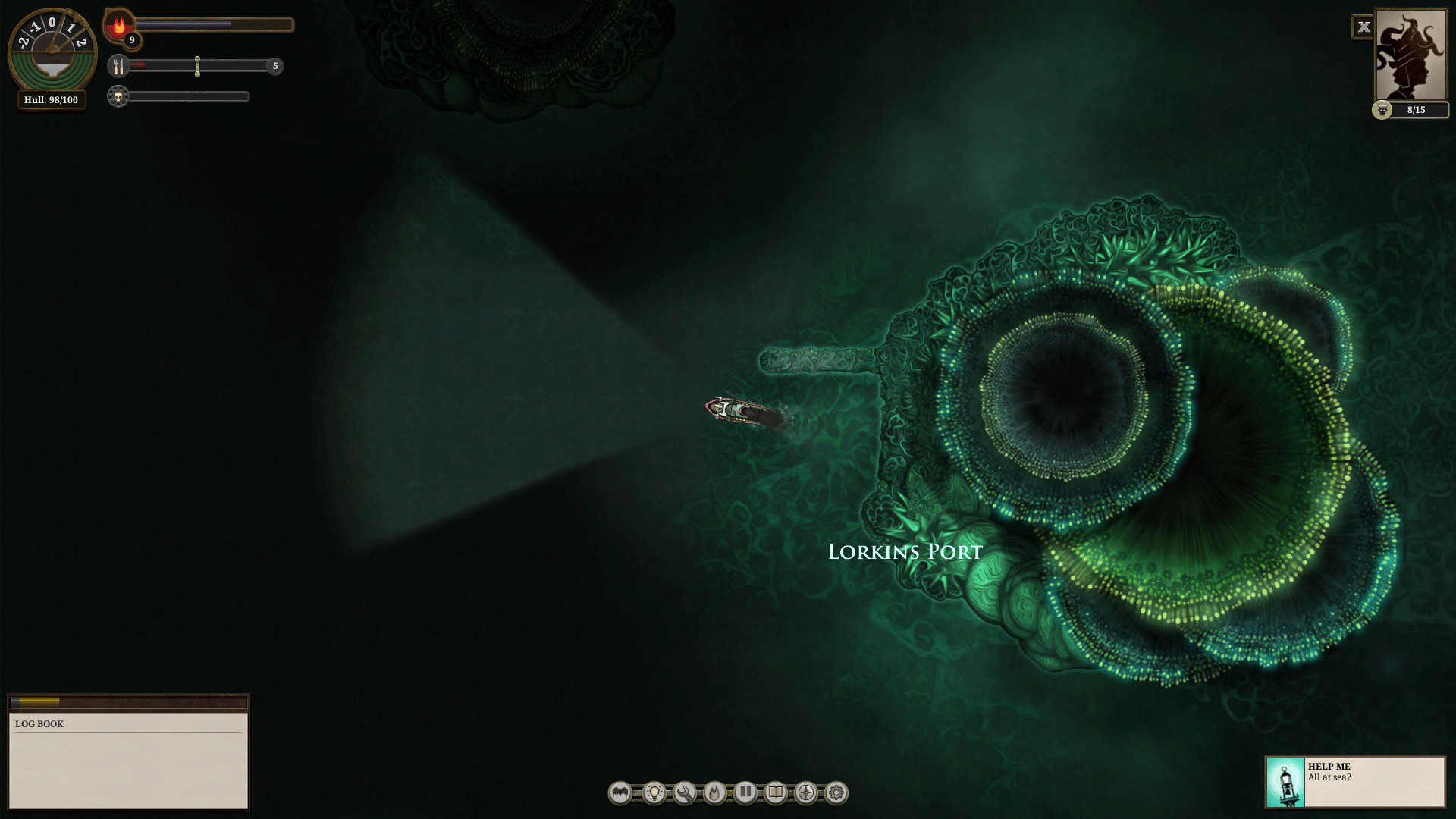
Even so, Sunless Sea captures the essence of Odysseus' journey better than any direct translation to the gaming medium could. The singers and poets who first told the story of Odysseus did so in a world that was not wholly known. In fact, the Ancient Greeks had a word, 'ecumene', to distinguish the parts of the globe they knew from those they didn't. Against that backdrop, who wouldn't fall for a fantasy about the island of the cyclops, or a direction you might sail in to reach the underworld? There is little more intriguing, or frightening, than the uncharted parts of the map.
For the Londoners beneath the earth, most of the map is uncharted. You will hear them make vague reference to the rival Khanate in the east, the Elder Continent in the south, and half-drowned nearby English suburbs like Mutton Island, where they cook fresh rubbery lumps. But there is much else out there that the Admiralty is keeping secret, or has never seen. The Empire of Hands, where monkeys collect souls like rings to increase their social stature. The Isle of Cats, ruled by a memory-harvesting pirate king, and the Court of the Wakeful Eye, ruled by cats.
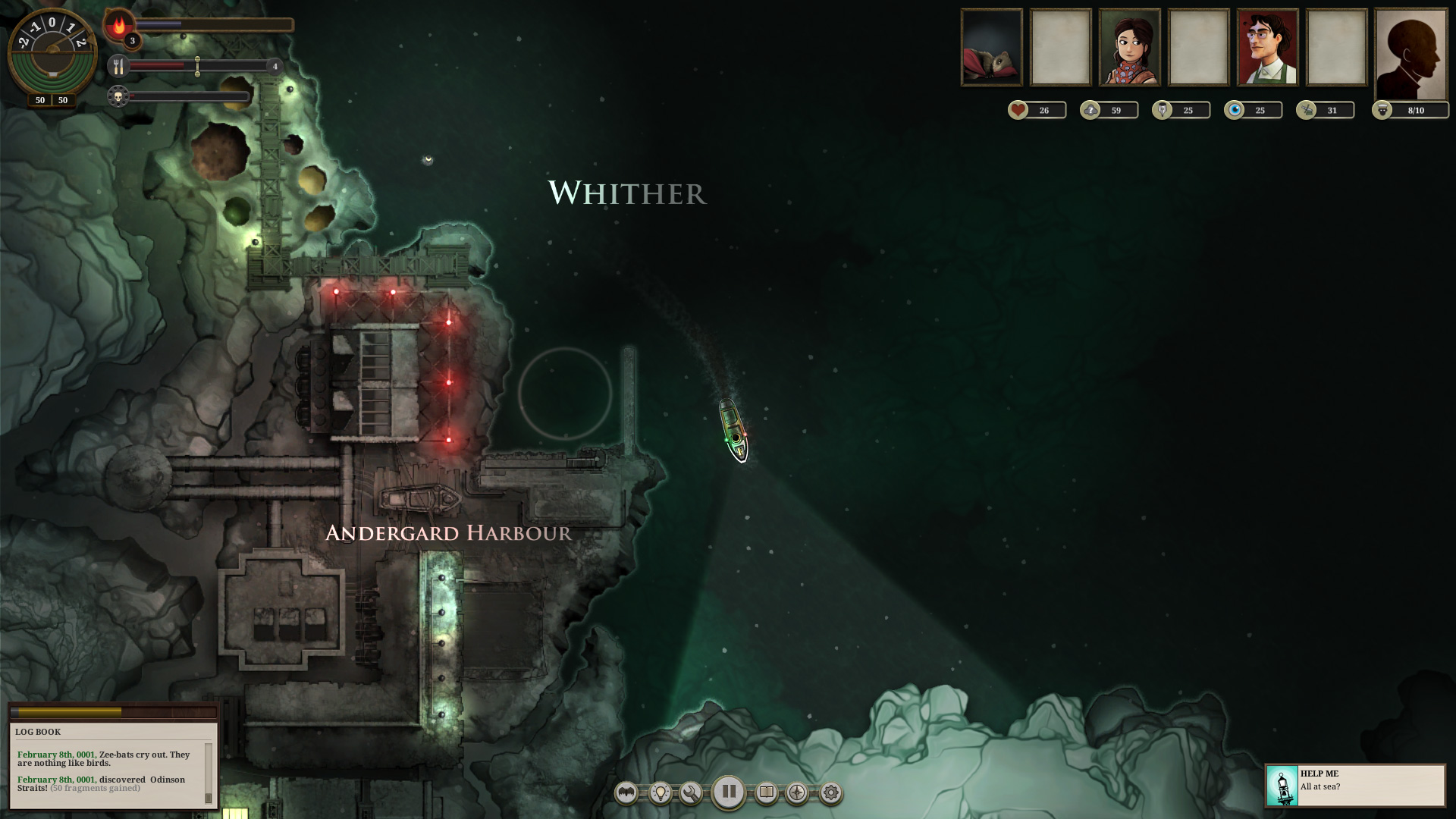
There be monsters, too, naturally: Bound Sharks and Lifebergs and spined things that feed on regret. You must steer your ship clear of whirlpools that rival Charybdis, and the Sunless equivalent of sirens. The drownies are no great beauties - they're sodden corpses, to be frank - but their song is known to lure zailors over the rail to their doom.
In Sunless Sea's brilliant browser sibling, Fallen London, you have three ways to deal with the drownies: turning your engines up to 11, performing the proper rites, or simply shoving wax in your zailor's ears. You're likely to have plenty of candlestuff to spare, given that molten wax blows across the zee from the south, enveloping those unfortunates caught out in the open.
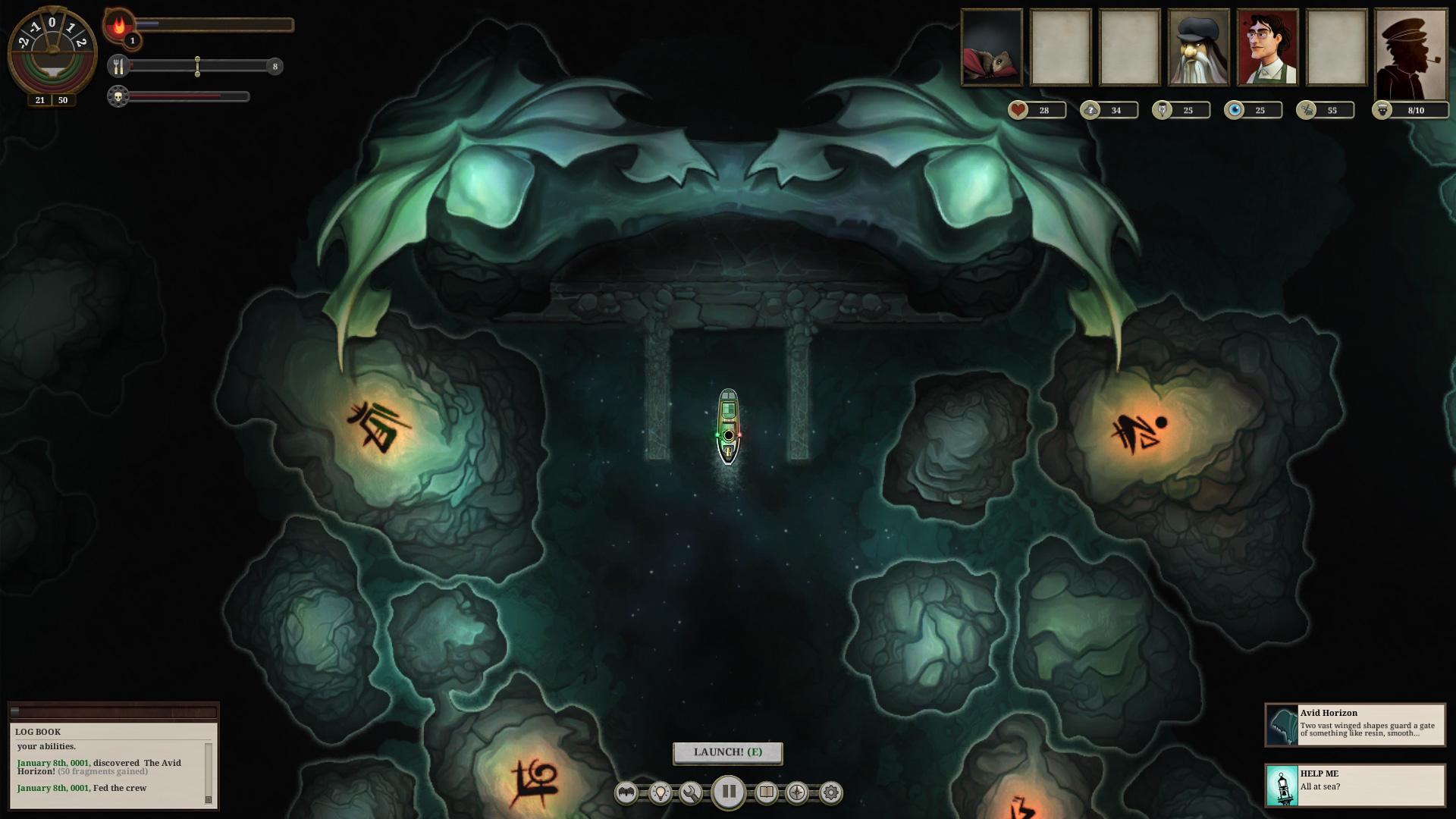
In practice, it's rarely the random events in Sunless Sea that finish you off. As Odysseus finds, your undoing tends to be of your own making. Delving deep into a mysterious ruin without light can drive your crew's terror to unmanageable levels, leading to madness and death. Failing to keep a close eye on supplies leads to the demise of your starved crew, one by one, leaving you with a question: do you eat the dead to avoid joining them? The consequences of crossing that line are peculiar and far-reaching.
Then there are the seafaring gods – three of them, by my count, all of whom are better left undisturbed. After gaining the attention of Storm, one of my zailors was driven to madness and murder. I shot her dead – aware as I did so that our number had dwindled from seven to five in the space of a single night.
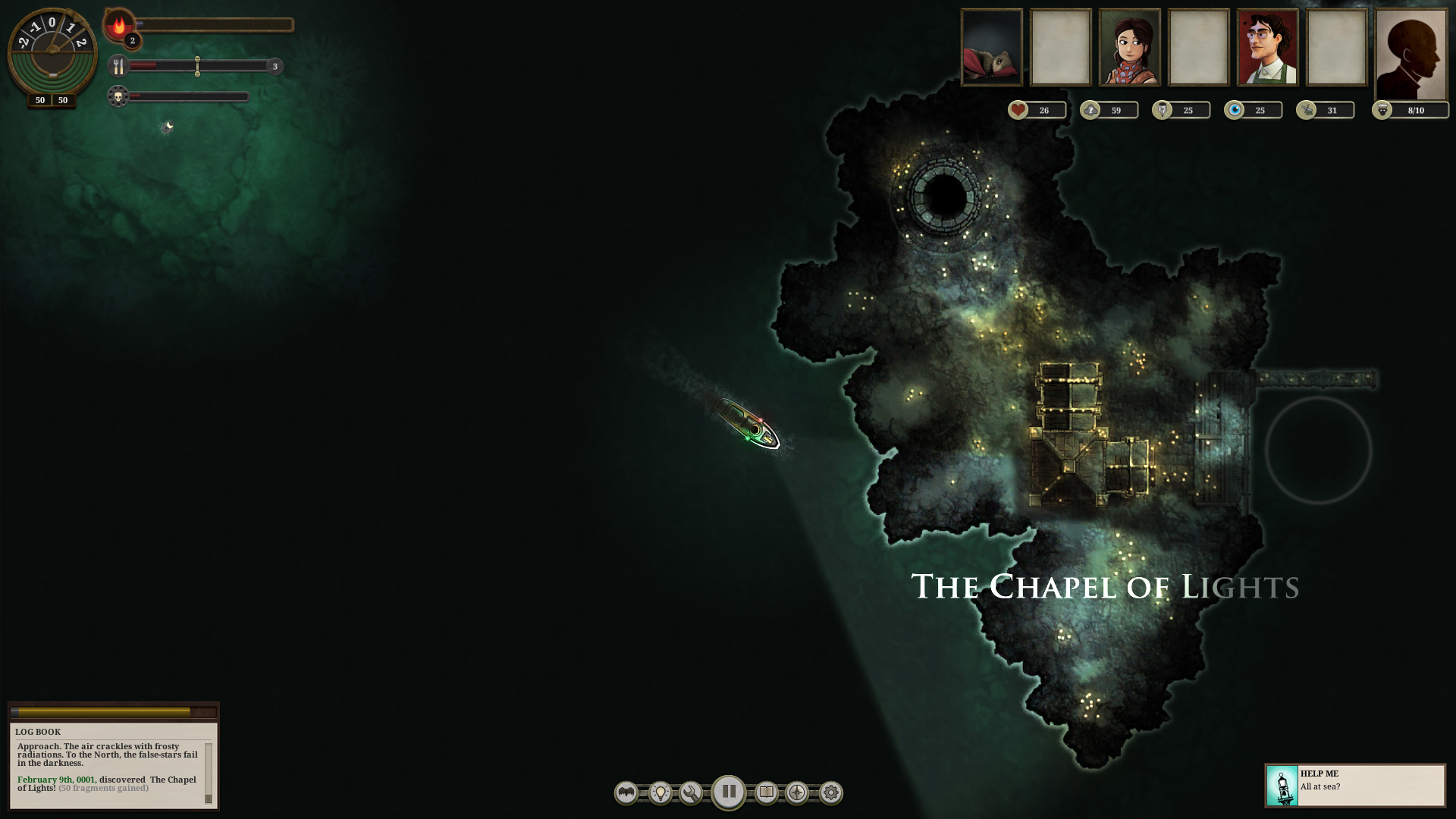
As in The Odyssey, however, a catalogue of horrors is answered by a homecoming. Every successful voyage ends back in Wolfstack Docks, on the eastern edge of London. Success might only mean survival, of course; perhaps, like Odysseus, you'll be the last adventurer standing. But if there has been loss and mayhem, that means there will be stories to tell. Adventures with which you can tempt fresh-faced zailors aboard for your next outing. Money to exchange for ship repairs, as the dockhands shake their heads in wonder at the wide gash marks in your hull. Home brings renewal, catharsis, and another chance.
One morning, off the shore of Mutton Island, I cracked a tooth on a chunk of grit in a ship's biscuit. The grit turned out to be diamond. "Diamonds are sacred to Stone," said a shipmate. "Give it to the zee, captain. It'll be luck for us." I did as they said, tossing a small fortune over the side into the deep. If there's one thing I've learned from Odysseus, it's that it pays to keep the gods on side.
The Odyssey review: "Mythological filmmaking of the highest order"