Why I love my gaming notebooks
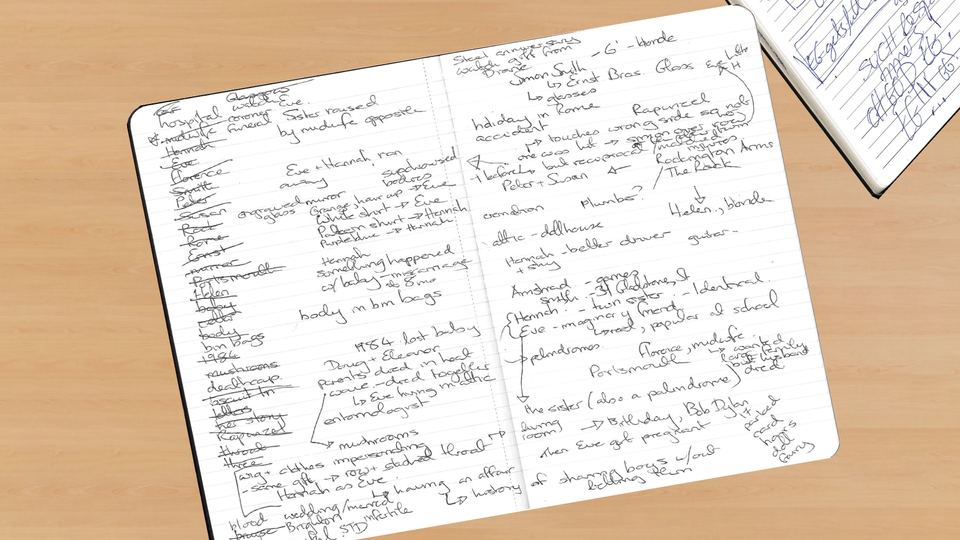
From the archives: This article originally ran in PC Gamer #326 (UK, January 2019).
Something I miss when I play digital games is the tactile side of play. It’s why videogames and board games coexist in my life so beautifully. One allows for complexity beyond what a pen-and-paper can track, and the other offers tokens to hold, boards to construct, people to physically turn to as you play. Somewhere in the middle are a wonderful selection of videogames where you feel compelled to take notes.
I’m not talking about games which demand you fetch a sheet of paper as part of the experience. These are games where my experience just happens to spill over into the real world as drawings and words. The ones where I decide to keep my thoughts straight by idly jotting down words, phrases, the location of a treasure to come back to or an area to investigate more thoroughly.
After a while the odd word or two becomes a page, perhaps even a map. Arrows allow paragraphs to put out little runners, setting down roots in blank spaces and fruiting whole new clusters of notes.
Playing detective
Her Story is one such game. The interface allows you to store a certain amount of information—you can add tags for each video clip, and keep a handful saved for reference. What it doesn’t offer is a way to note all the different potential search terms a new clip throws up and which you want to work through when you’re constantly being sidetracked.
To stop myself forgetting, I reached for my notebook. A record of the victim started to accumulate on one page while the local pub formed another hub. The left side filled up with keywords. One cluster of notes tried to follow outfit changes but it got hemmed in by a lost baby, a widowed midwife, mushrooms, mirrors and a forensic entomologist.
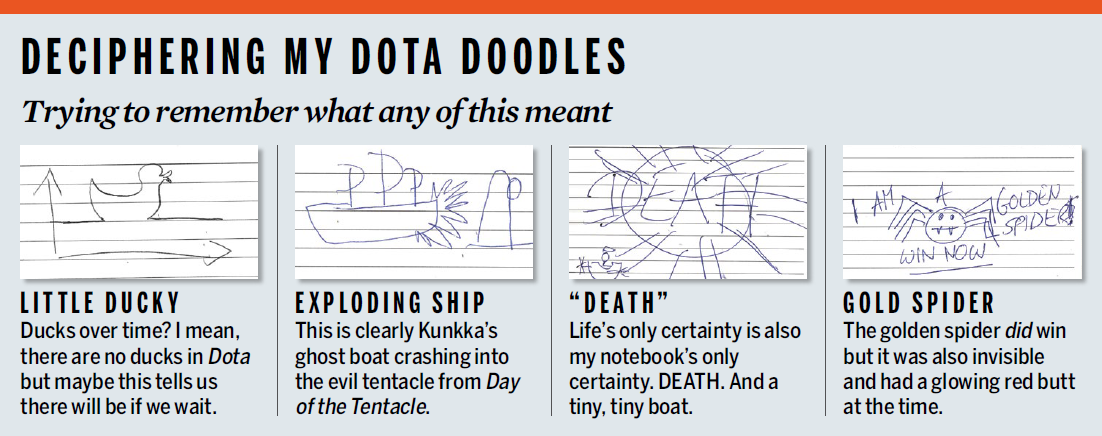
I had enough for a basic solution to the crime after a couple of hours so that’s tangled in there, too. But so many words remained uninvestigated and I wanted to check my working, so I kept going. The result is a section of notebook brimming with curiosity. I like it not so much because it’s a useful record of information—my notes are as baffling to me as to a stranger once the game has faded from memory—but because the volume of writing, and the energetic connections make visible parts of the process of playing a game.
My Return of the Obra Dinn notes take on a different form, but the affection I feel is the same. Having spent the majority of the game keeping all the information in my head or using the map and crew documents as reference points, I reached for my notepad. I needed to cross reference a lot of objects and a lot of names to make progress.
Instead of evidence swelling into lumps of story on the page like it did in Her Story, that part happened in my head and my notebook was about ruling out possibilities. Numbers and names have circles round them, grouping them in ways which are already fading from my mind. These pages feel more like a code because of the shorthand and abstractions.
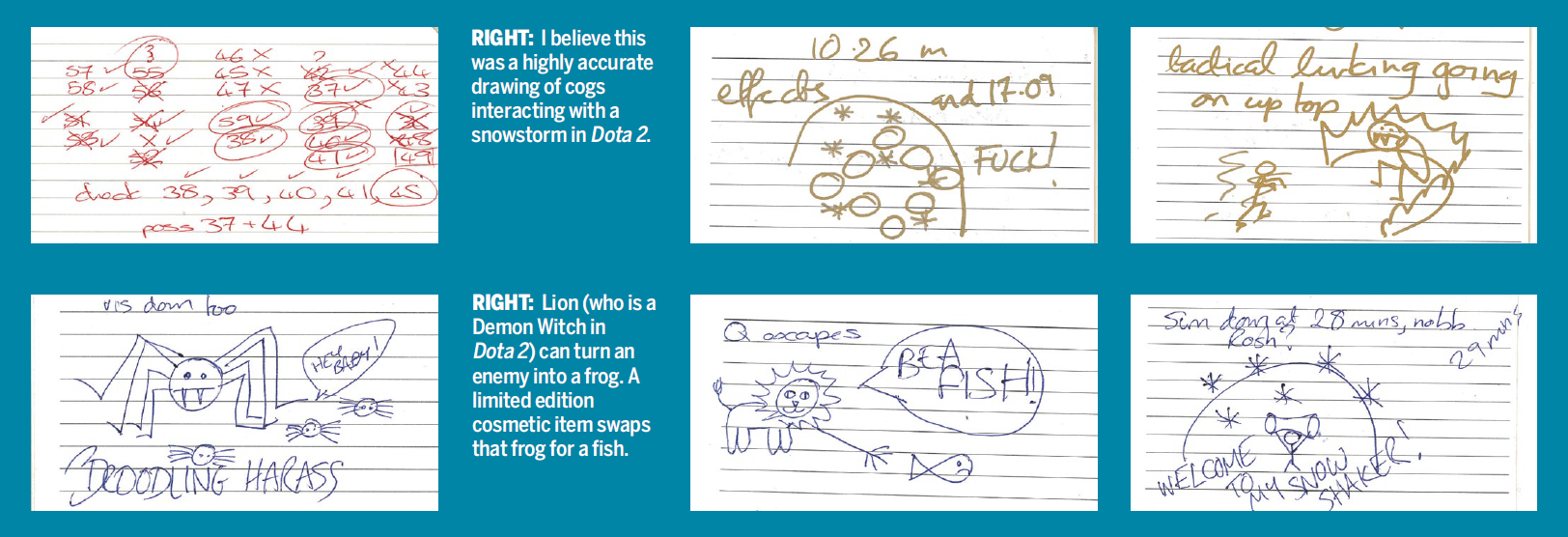
Different again are my esports notes. For Dota, League and Smite I’m in the habit of recording each match at an event in my book. Every match starts with the list of players and which characters they’ve picked as well as who got banned. It’s a ritual that helps me settle in for a game as much as a journalistic reference. After all, I could just check VODs or a wiki for that data if I forget.
Match report
From the archives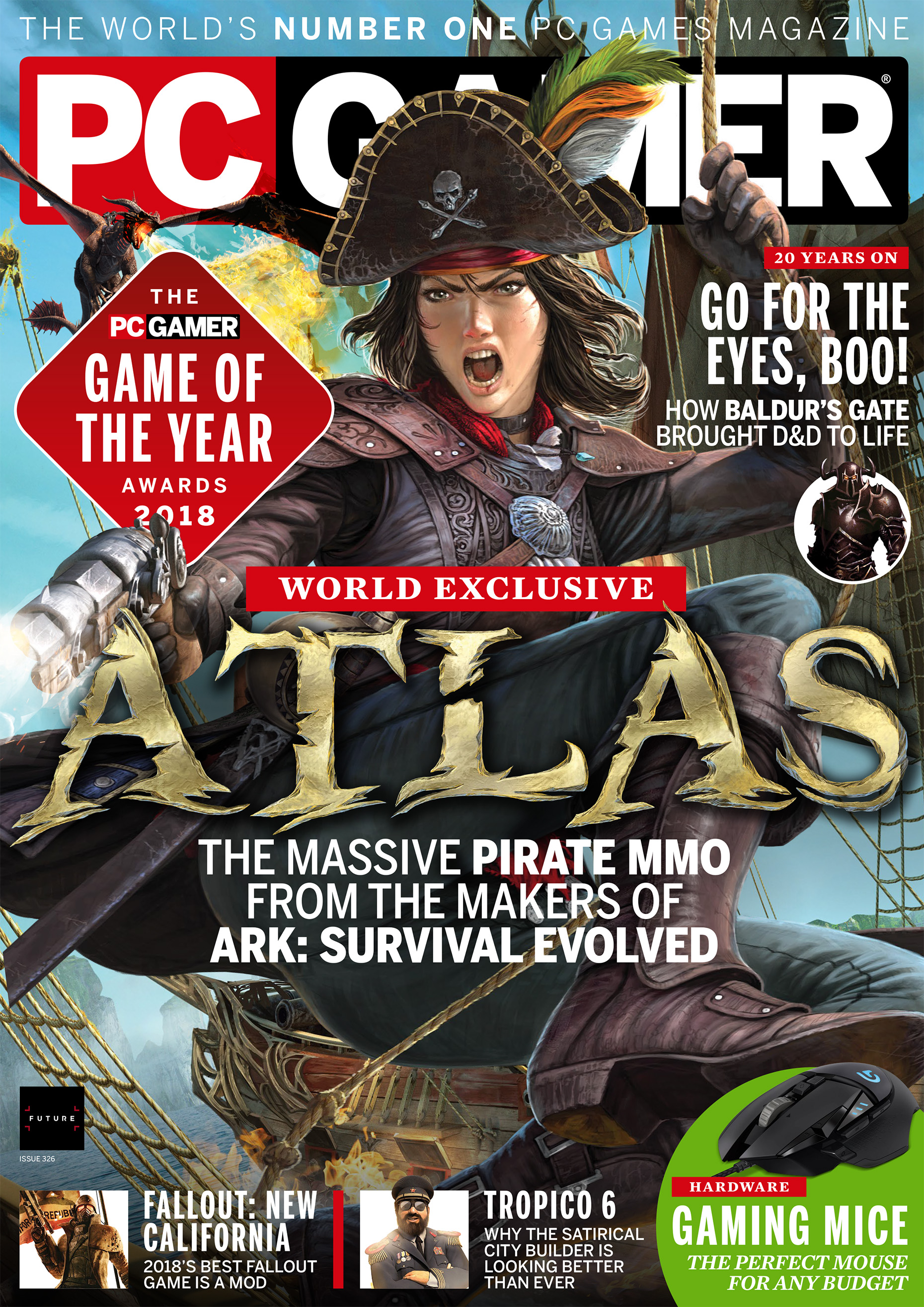
This interview was originally published in PC Gamer #326 (UK, May 2019).
You can still subscribe to PC Gamer to get new issues of the magazine (in print!) every month.
Writing character names over and over helps me absorb trends in the game—it gives them an analogue feel as well as their digital flavour. Sometimes I write out skillsets for characters I haven’t played in a while. And then it’s just whatever feels noteworthy from the match. Key kills, maybe, and big fights, weird decisions, unusual item choices.
But I also add scrappy sketches and during a tense game the breathlessness and excitement on the screen leaves a mark in my book. The writing gets faster, harder to read apart from upper case explosions of record- keeping, and it’s smothered in ellipses and exclamation marks.
The notes I make around games—scrawled maps to remind me of a route, gold marker pen spiders nudging up against swearwords, lists of murder suspects that span double page spreads—are some of my fondest possessions. They allow a digital pursuit to spill over into the physical world and express so much time, excitement and mental energy.
Just don’t ask me what they mean!
2026 games: All the upcoming games
Best PC games: Our all-time favorites
Free PC games: Freebie fest
Best FPS games: Finest gunplay
Best RPGs: Grand adventures
Best co-op games: Better together